
Home Exercises That Actually Get Done: The Lost Paper Sheet vs. The Video on the Patient’s Phone
· r3Physio Team
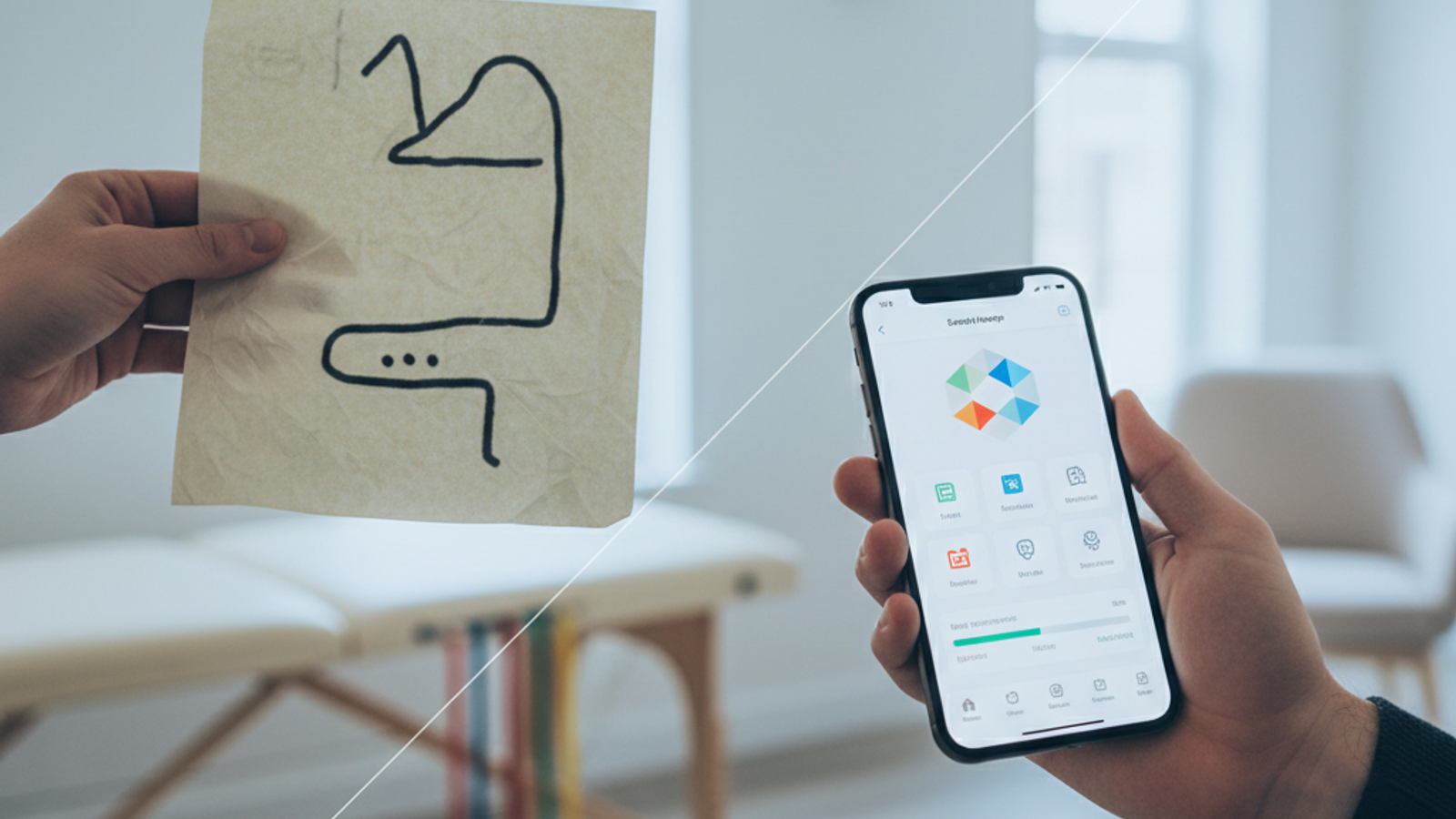
Every physiotherapist has seen it: the patient leaves the session with a printed sheet of exercises, nods confidently, and then… nothing. A week later, they return having done maybe one of the five exercises. It’s not laziness—it’s a system that’s been broken for decades. The paper sheet is a relic. The patient’s phone is the answer.
The Problem in Numbers
Studies show that 40-60% of patients fail to complete their home exercise programs. That means for every 10 patients you give a pauta, 4-6 don’t follow it correctly. The consequences?
- Slower recovery times. Without consistent exercise, chronic pain and post-surgical rehab take longer.
- Higher relapse rates. Patients who skip exercises are more likely to re-injure themselves.
- Lower patient satisfaction. If they don’t see progress, they’ll question your effectiveness.
The cost? Not just in clinical outcomes, but in lost trust and lost referrals.
Why the Classic Paper Sheet Fails
The traditional approach—handing a patient a printed sheet—is flawed from the start:
- No visual guidance. "3 sets of 12 squats" doesn’t mean much if the patient doesn’t know proper form.
- No feedback loop. Without tracking, you have no idea if they’re doing the exercises—or doing them right.
- No motivation. A piece of paper doesn’t remind them, encourage them, or show progress.
The paper sheet is a one-way communication tool. In 2024, that’s not enough.
The Solution: Short Videos on the Patient’s Phone
You don’t need a high-tech solution. You just need a short, clear, mobile-friendly video for each exercise. Here’s how to make it work:
1. Keep It Short (1-2 Minutes Max)
Patients won’t watch a 10-minute tutorial. A 60-second video showing proper form, common mistakes, and a verbal cue (e.g., "Keep your knees behind your toes") is all you need.
2. Make It Easy to Access
If they have to log in or dig through an app, they won’t do it. Send the video via WhatsApp, SMS, or email—wherever they’re already checking messages.
3. Add a Quick Check-In
After they watch the video, ask them to send a short voice or text note confirming they understand it. This creates accountability.
4. Use the Patient Portal for Tracking
A simple "Done/Not Done" checkbox in the portal lets them log completion. You see the data, they see their progress.
5. Send a Weekly Reminder
A quick message like, "Hey, did you do your exercises this week? Reply ‘YES’ or ‘NO’" keeps them on track without being intrusive.
6. Review Progress in the Next Session
Pull up their log and say, "I see you did the squats 3 out of 5 days. Great job! Let’s tweak the other two exercises." Data beats guesswork.
7. Let Them Ask Questions via Chat
A quick message to you or your team—"This exercise hurts my knee, is that normal?"—prevents them from stopping prematurely.
How to Implement This in Your Practice
- Record or find short demo videos (YouTube, PhysioVideo, or your own recordings).
- Upload them to a patient portal (or send them directly via chat).
- Assign exercises with a due date (e.g., "Do this 3x/week for 2 weeks").
- Set up automated reminders (via email or SMS).
- Review adherence at the next session before adjusting the plan.
The Bottom Line
The paper sheet is dead. The patient’s phone is the new standard. Short videos, easy access, and a quick feedback loop—that’s all you need to boost adherence from 40% to 80%.
If you want to see how this works in practice, check out the demo. Or, if you prefer, start your free 30-day trial—no credit card required.
The future of home exercises isn’t high-tech. It’s just smarter.